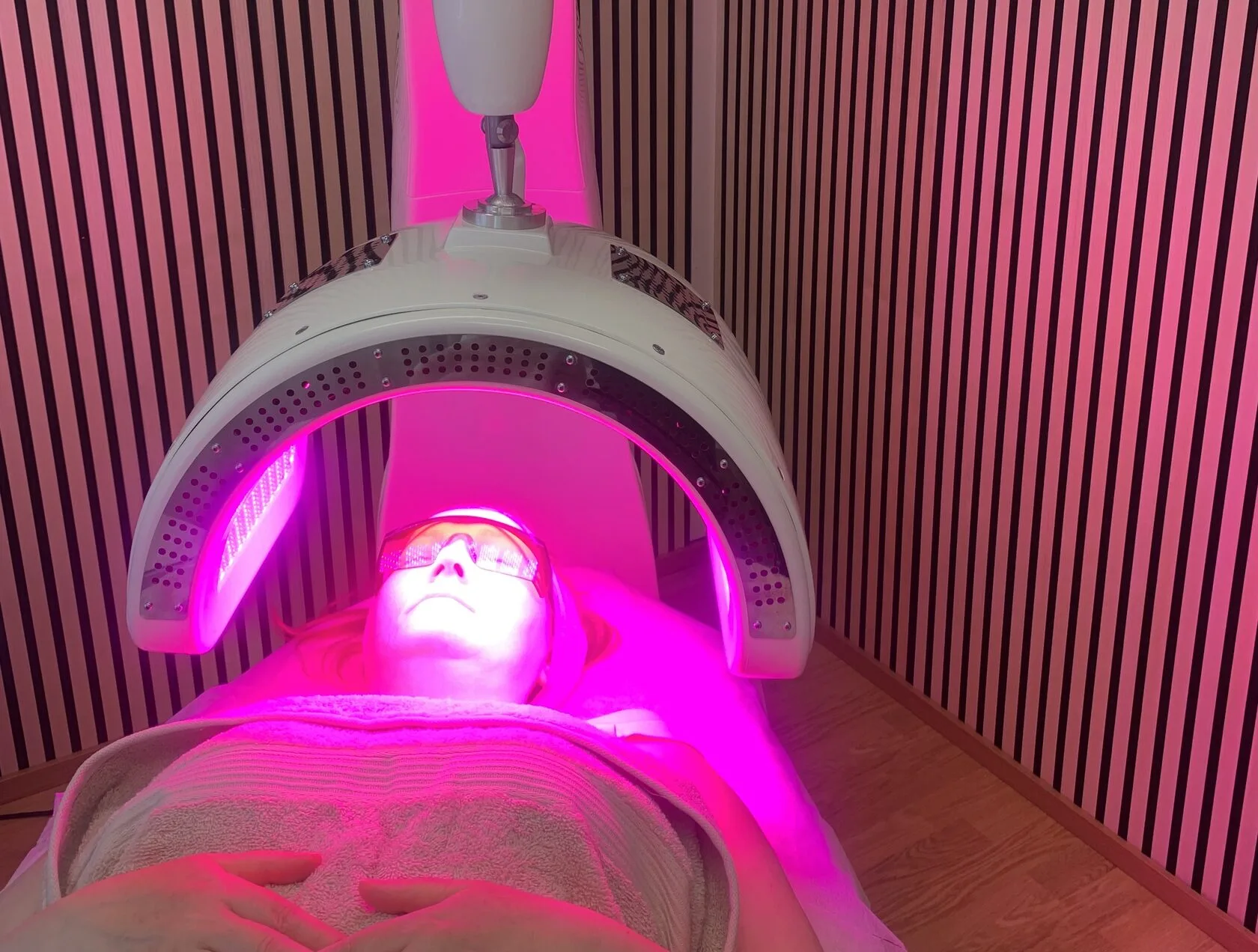
Dermalux Tri-Wave LED
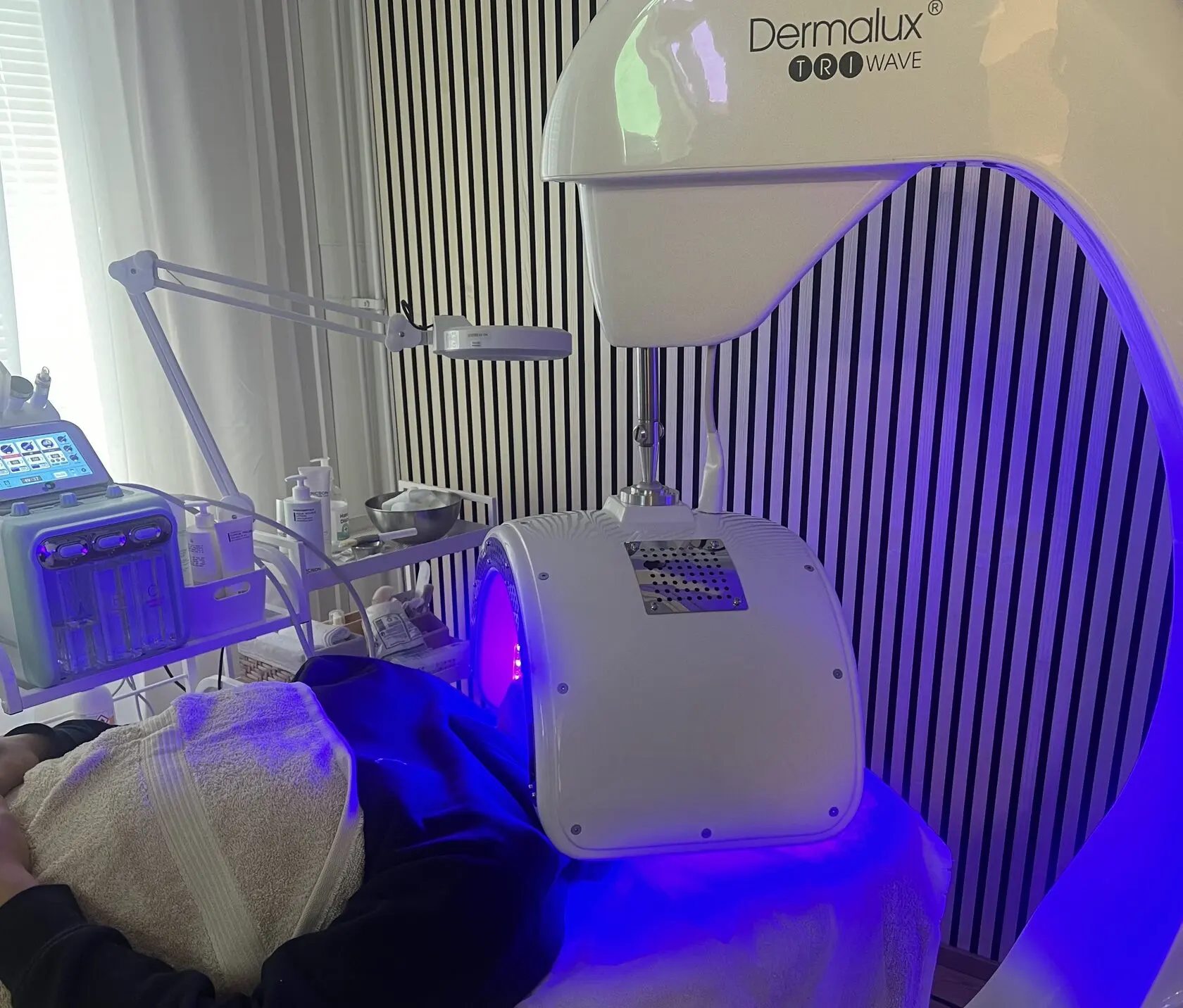
Dermalux Tri-Wave light therapy with red, blue and near-infrared light. It calms, brightens and supports the skin's own renewal – with no touch and no downtime.
75 €60 min
 Book a visit
SKINIQUE JOURNAL · Dermalux · 2 min read
LED light therapy is one of the gentlest ways to support the skin. We explain in plain words how red, blue and near-infrared light work, who it suits and what results to expect.
Skinique editorial
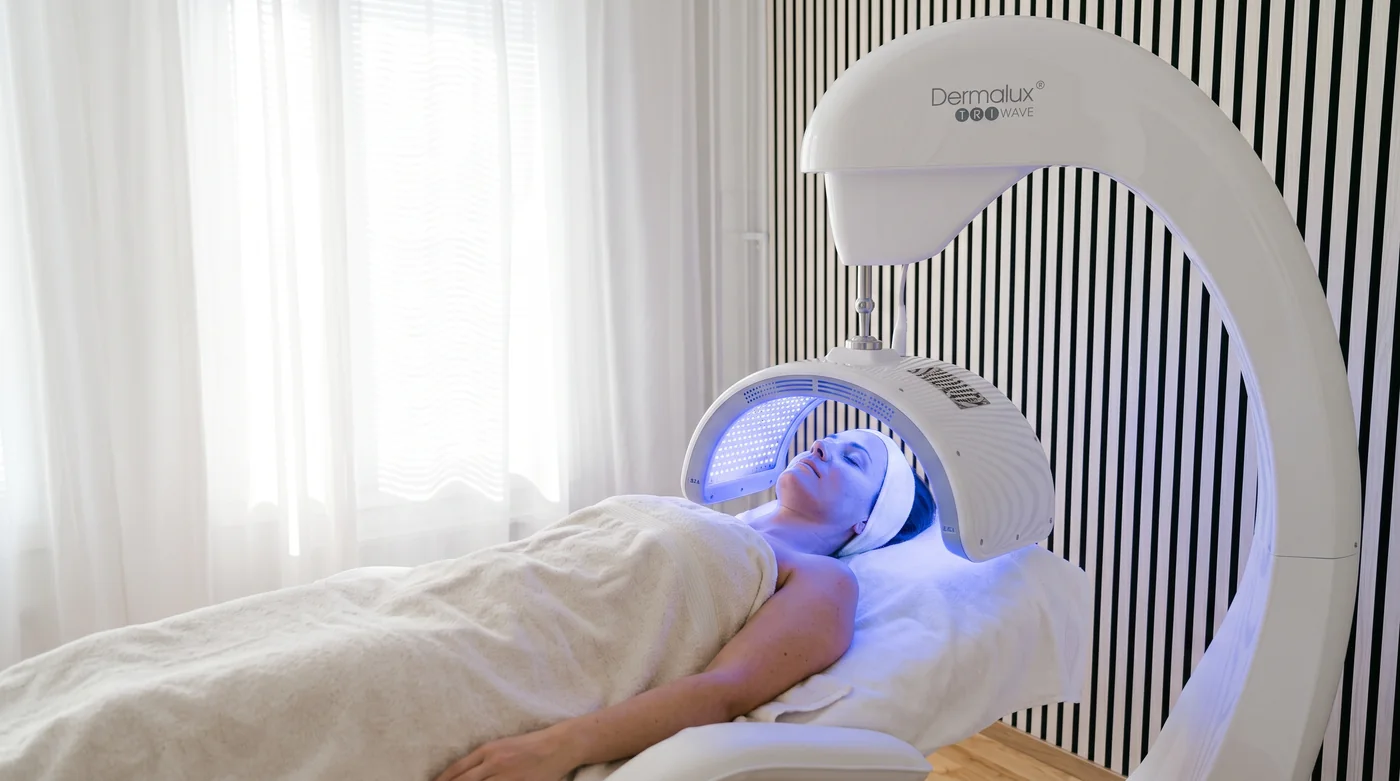
LED light therapy sounds futuristic, but the principle is simple: the skin receives certain colours of light – specific wavelengths – that skin cells can absorb. The light doesn't burn or heat the skin significantly, contains no UV and doesn't break the skin. That's why LED also suits skin that is sensitive, red or recovering from another treatment.
Skinique uses a professional Dermalux Tri-Wave device. Home LED masks have become common, but a professional device is in a different league in power and evenness of light.
Dermalux Tri-Wave uses three wavelengths, together or separately:
See the illustration below of how deep each light reaches.
Select a colour to explore its role in Dermalux care.
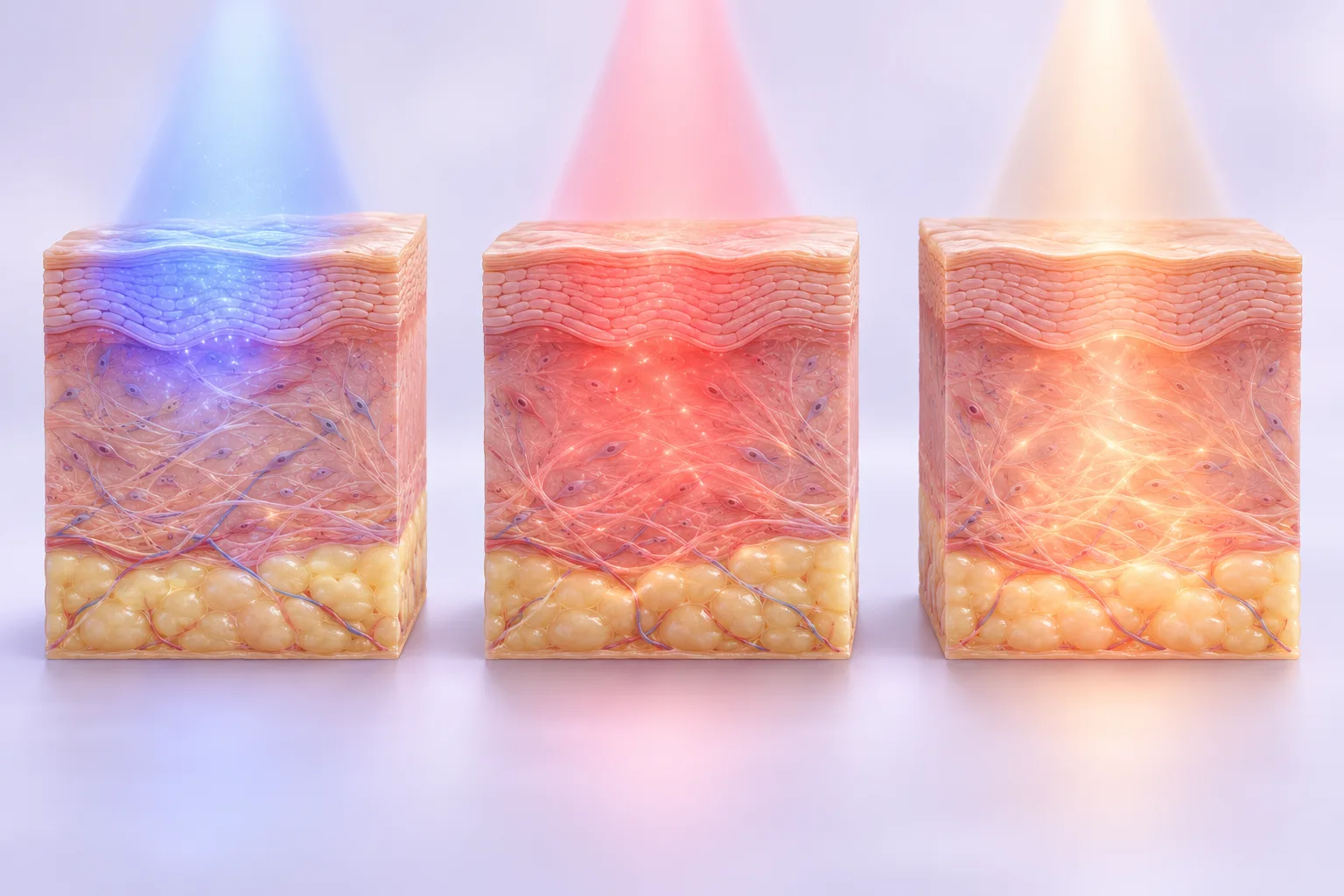
In Dermalux programmes, blue light is meant for blemish-prone skin. It does not replace cleansing or treatment prescribed by a doctor.
Red light is used when the goal relates to skin texture and fine lines. The programme is chosen to suit your skin.
Near-infrared light is invisible, so the picture shows it as a warm tone. According to the manufacturer, it supports skin recovery and suits skin prone to redness.
Almost everyone. LED is a particularly good choice when:
LED isn't used during pregnancy, or if you take medication that increases light sensitivity, or have a light-sensitivity condition or light-triggered epilepsy.
Many people notice fresher skin from the very first visit. The effect of light on cells adds up over time, though, so a clearer and longer-lasting result comes from a series of visits. Your cosmetologist looks at your skin and suggests how many visits you need and how often.
For a series there is the Dermalux course of 6 visits, which works out cheaper than booking each visit separately. The first visit is described in your first Dermalux session.
Dermalux LED light therapy is a treatment of its own, about an hour long, with cleansing and finishing included. Light can also be combined with another facial: the booking page lists which add-ons are available. After a Hydrapeel or a manual cleanse, for example, the light helps settle the skin and can ease redness.
Find out more about combining LED with other treatments.
It's good to know the limits too. LED doesn't clear pores mechanically, doesn't erase wrinkles instantly and doesn't replace sunscreen or medical treatment for acne. It's a supporting treatment that works best as part of the whole: the right cleansing, good home care and regularity.
The honest expectation is fresher, calmer, more balanced skin – not a new face overnight.
Dermalux
Blue LED light is a popular aid for blemish-prone skin. We explain what it's based on, how to combine it with cleansing and home care, and when to see a doctor.
Dermalux
15 minutes of LED can make a good facial even better – but not always. Here's which treatments LED works best with, and why.
Dermalux
What actually happens during LED light therapy? We walk through your first Dermalux visit from start to finish: preparation, sensations, aftercare and planning a series.
Tell us what's on your mind. Deniza will help you choose a suitable treatment before you book.
Hi! Can I help?

Deni answers with ready-made answers from the website and gives no medical advice. Questions are saved without your name to improve the answers – please do not write personal data in the chat.
We use analytics (Google Analytics and Microsoft Clarity) to see how the site is used and to improve it. They are turned on only if you accept. You can change your choice any time at the bottom of the page. Privacy policy