GIGI Hydra Therapy
A deeply hydrating GIGI facial for dry, tight and tired skin. Gentle exfoliation and professional hydrating products bring back softness.
105 €90 min
 Book a visit
SKINIQUE JOURNAL · Dermalux · 2 min read
Blue LED light is a popular aid for blemish-prone skin. We explain what it's based on, how to combine it with cleansing and home care, and when to see a doctor.
Skinique editorial
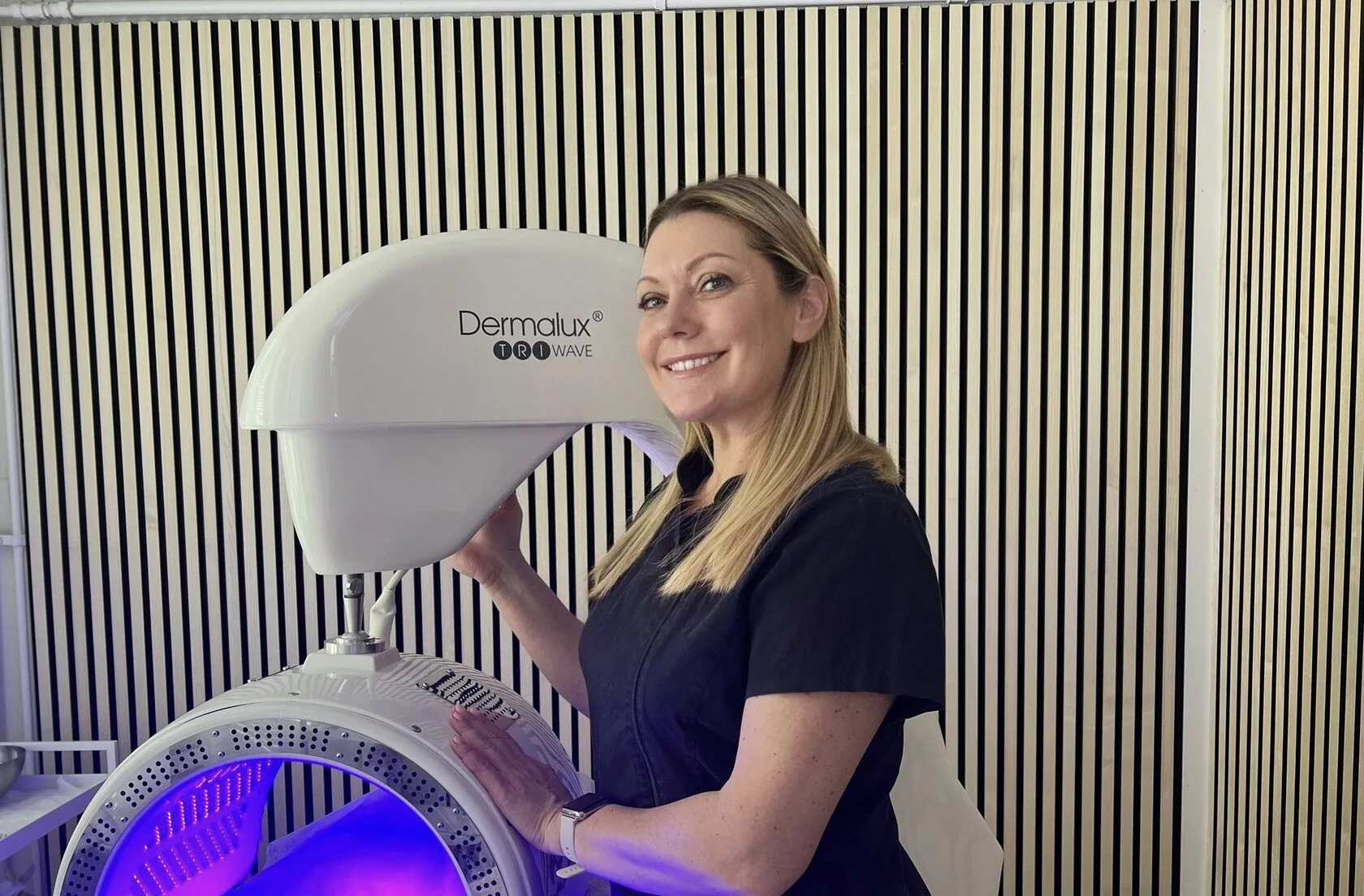
Blemish-prone skin is frustrating for many: as one spot heals, another appears. Many try stronger and stronger products – acids, scrubs and drying gels. The result is often skin that is oily, dry and red at the same time.
LED light therapy is a good support in exactly this situation because it doesn't add strain: no acids, no scrubbing, no squeezing.
The bacteria on the skin that contribute to breakouts contain light-sensitive compounds. Blue light (415 nm) acts on them at the skin's surface. Dermalux's manufacturer recommends blue light specifically for blemish-prone skin.
Blue light is often combined with near-infrared (830 nm), which is used to calm redness and support recovery. Together they suit skin with both inflammation and irritation. More about the lights: how Dermalux works.
Skin can have all of these at the same time.
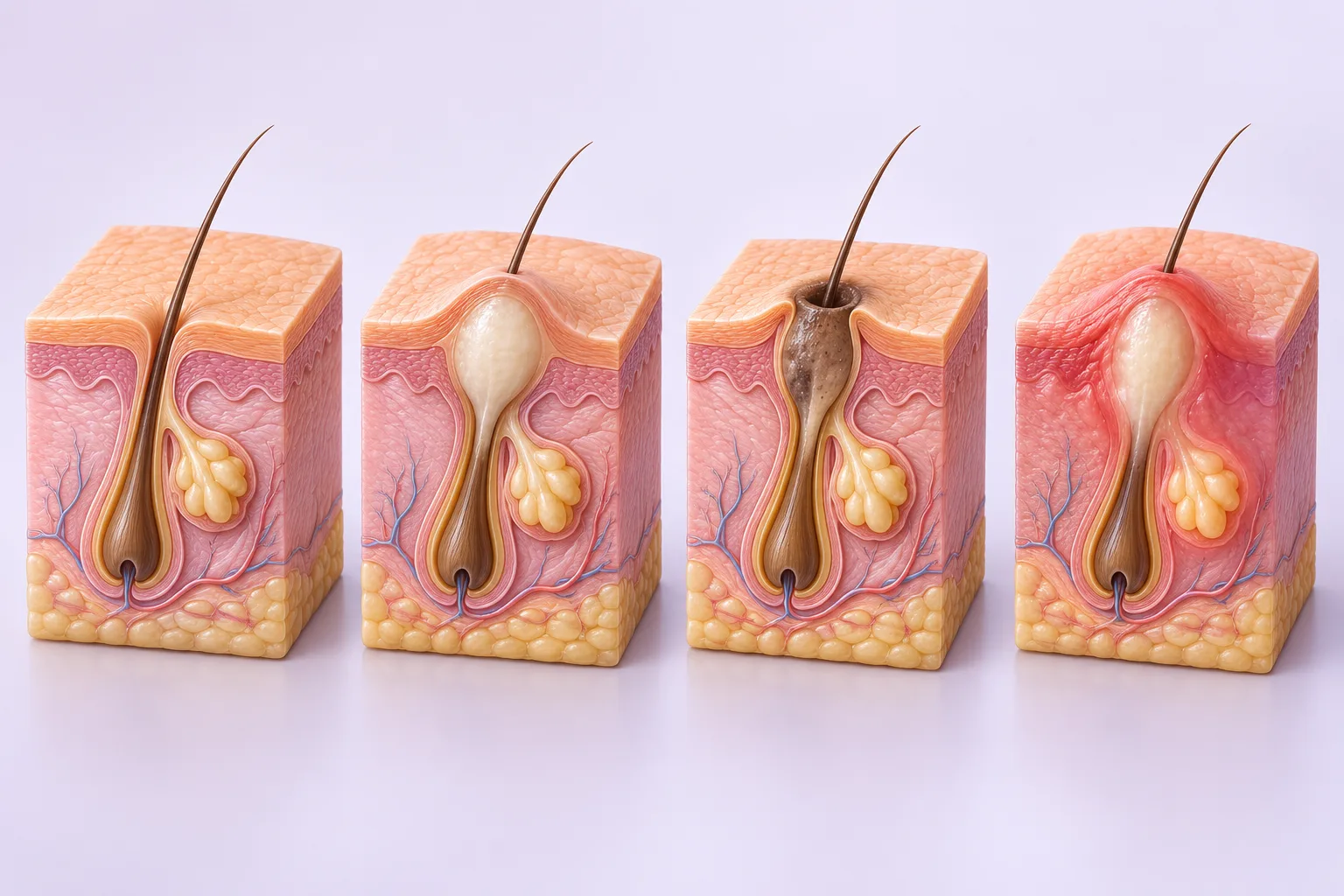
A follicle without an obvious blockage, shown for comparison.
A blockage beneath the surface. Care depends on the whole skin condition.
The dark plug reflects oxidation; it does not mean the skin is dirty.
Redness and pain need attention. Persistent or deep inflammation calls for medical assessment.
It's important to understand what LED does and doesn't do. It doesn't open clogged pores, remove blackheads or smooth acne scars. That's why the best result comes from combining LED with cleansing:
LED is added at the end of a cleanse as a 15-minute add-on, or taken as a series on its own.
Select a colour to explore its role in Dermalux care.
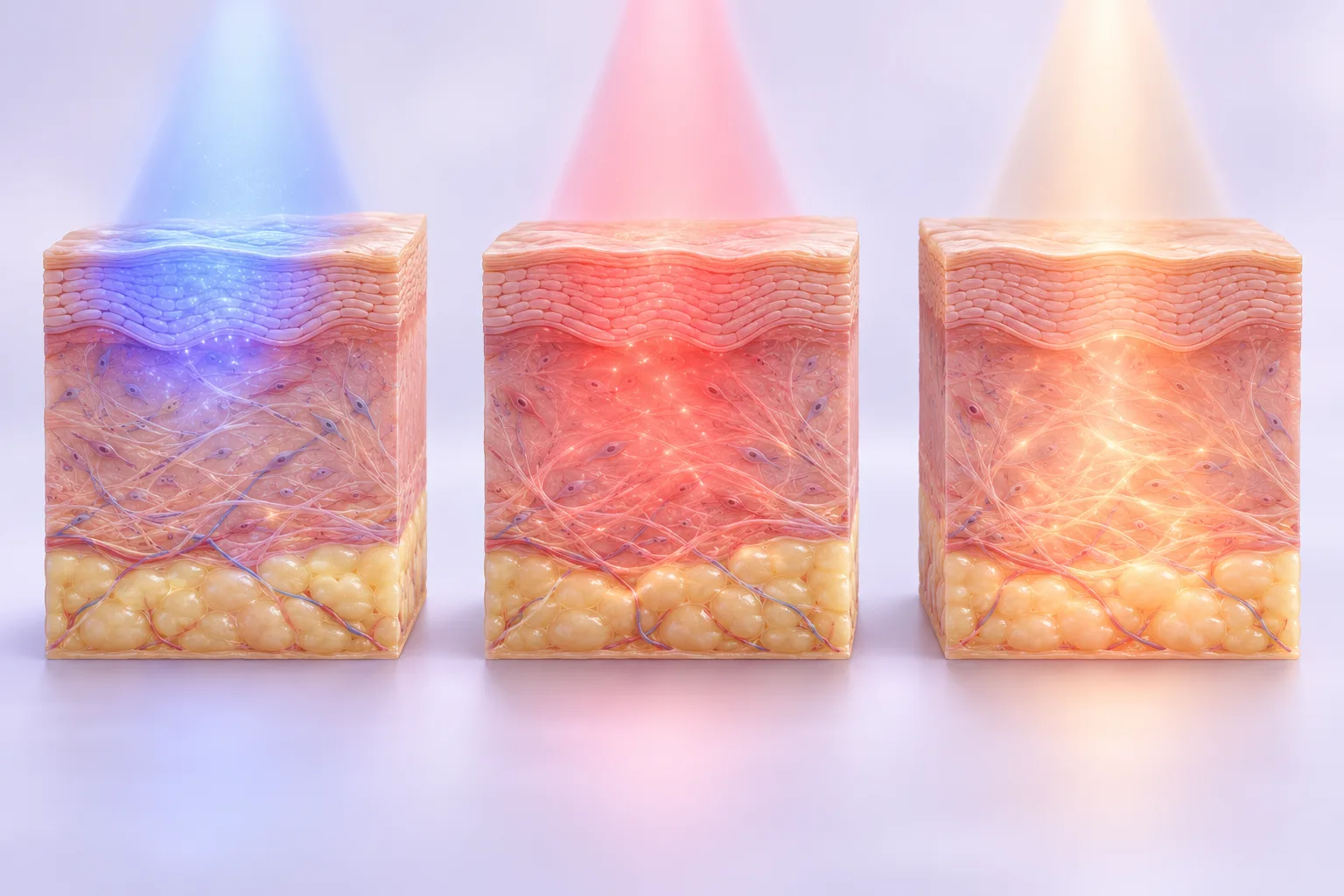
In Dermalux programmes, blue light is meant for blemish-prone skin. It does not replace cleansing or treatment prescribed by a doctor.
Red light is used when the goal relates to skin texture and fine lines. The programme is chosen to suit your skin.
Near-infrared light is invisible, so the picture shows it as a warm tone. According to the manufacturer, it supports skin recovery and suits skin prone to redness.
Light therapy and cleansing support the skin at visits, but your skin lives at home. A simple routine often works best:
If you use products prescribed by a doctor, continue them and mention them at the start of the treatment.
Light therapy and facials help with mild and moderate breakouts. Deep, painful nodules, scarring or acne that changes quickly belong with a doctor first, though. A doctor's view is also worth having if months of consistent home care have not changed anything.
Light therapy can continue alongside medical treatment – just tell your cosmetologist which medicines you use. Read also breakouts in adulthood and GIGI and blemish-prone skin.
For a ready plan, the Clear Skin programme combines cleansing, calming care and home-care guidance over several visits. For light therapy alone there is the Dermalux course.
A deeply hydrating GIGI facial for dry, tight and tired skin. Gentle exfoliation and professional hydrating products bring back softness.
105 €90 min
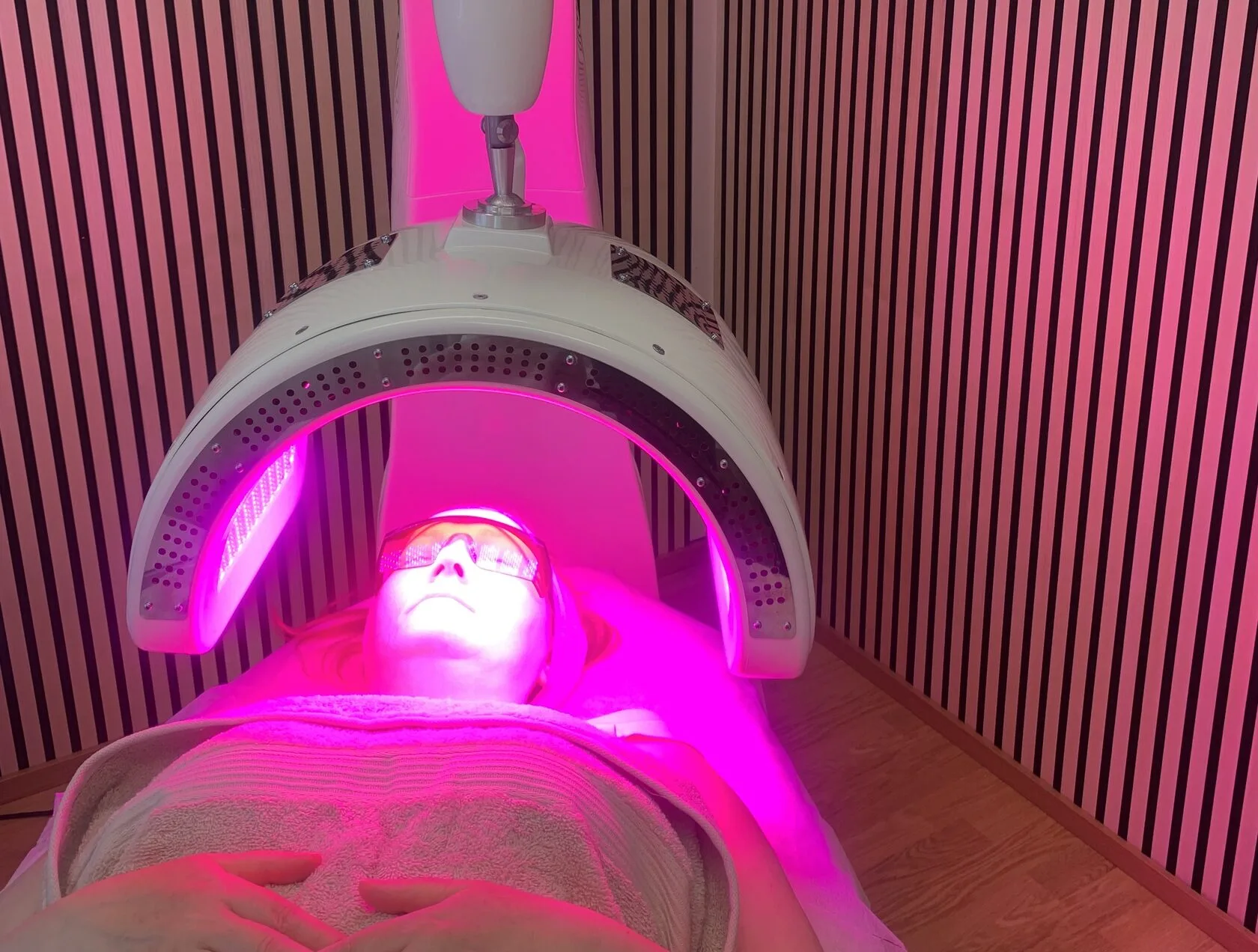
Dermalux Tri-Wave light therapy with red, blue and near-infrared light. It calms, brightens and supports the skin's own renewal – with no touch and no downtime.
75 €60 min

A multi-step facial: cleansing, exfoliation, a relaxing massage and a mask chosen for your skin type. A great basic treatment for every skin type and for regular upkeep.
80 €60 min
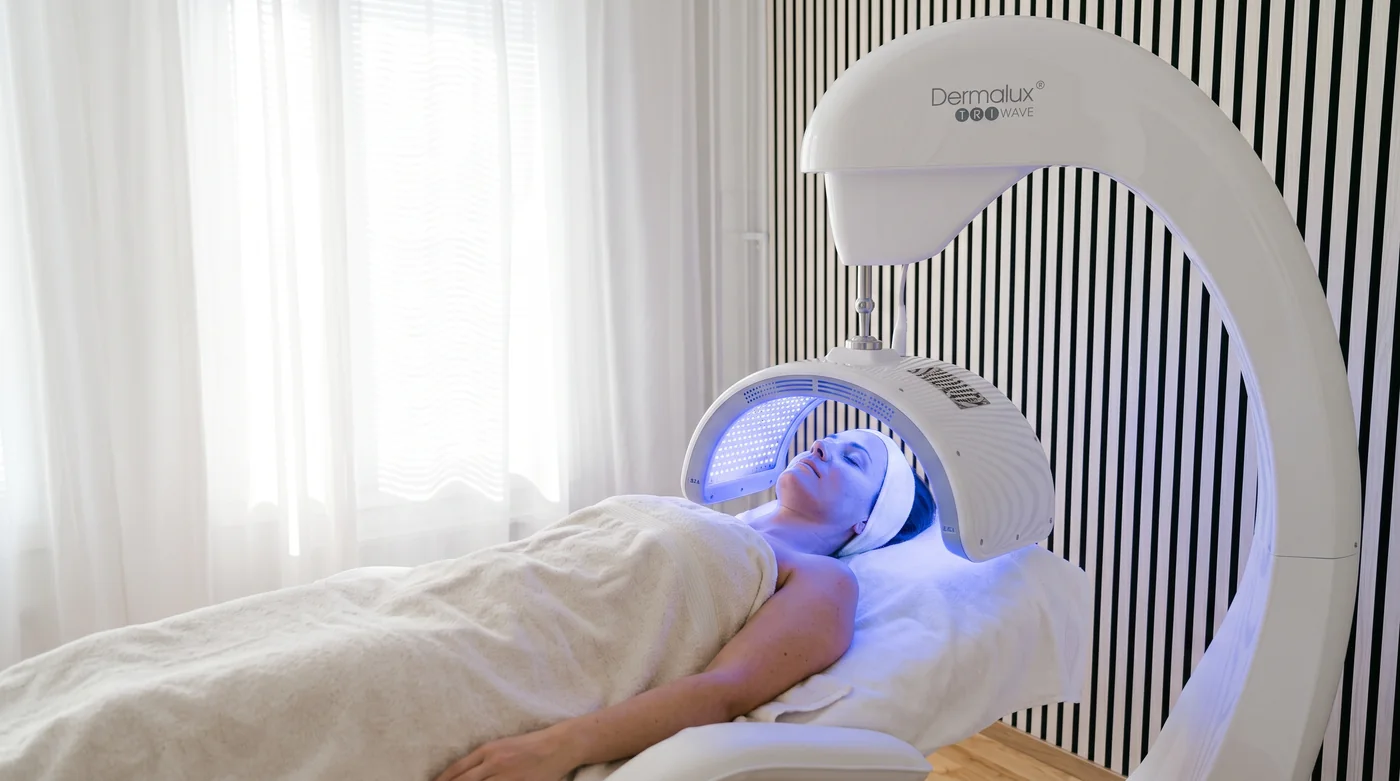
Dermalux
LED light therapy is one of the gentlest ways to support the skin. We explain in plain words how red, blue and near-infrared light work, who it suits and what results to expect.
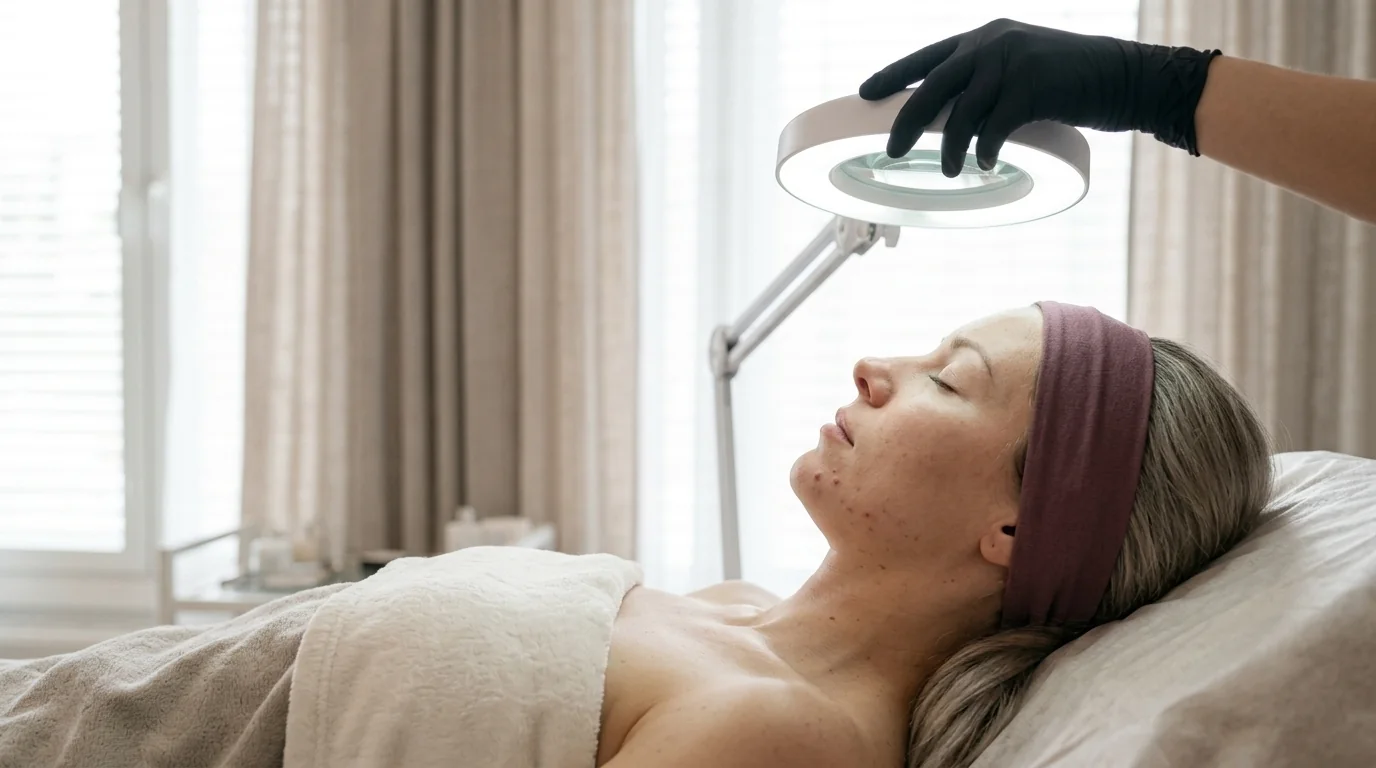
Skin care
Adult breakouts are more common than people think, and they differ from teenage acne. We explain the causes, how to care for skin without irritating it and when to see a doctor.
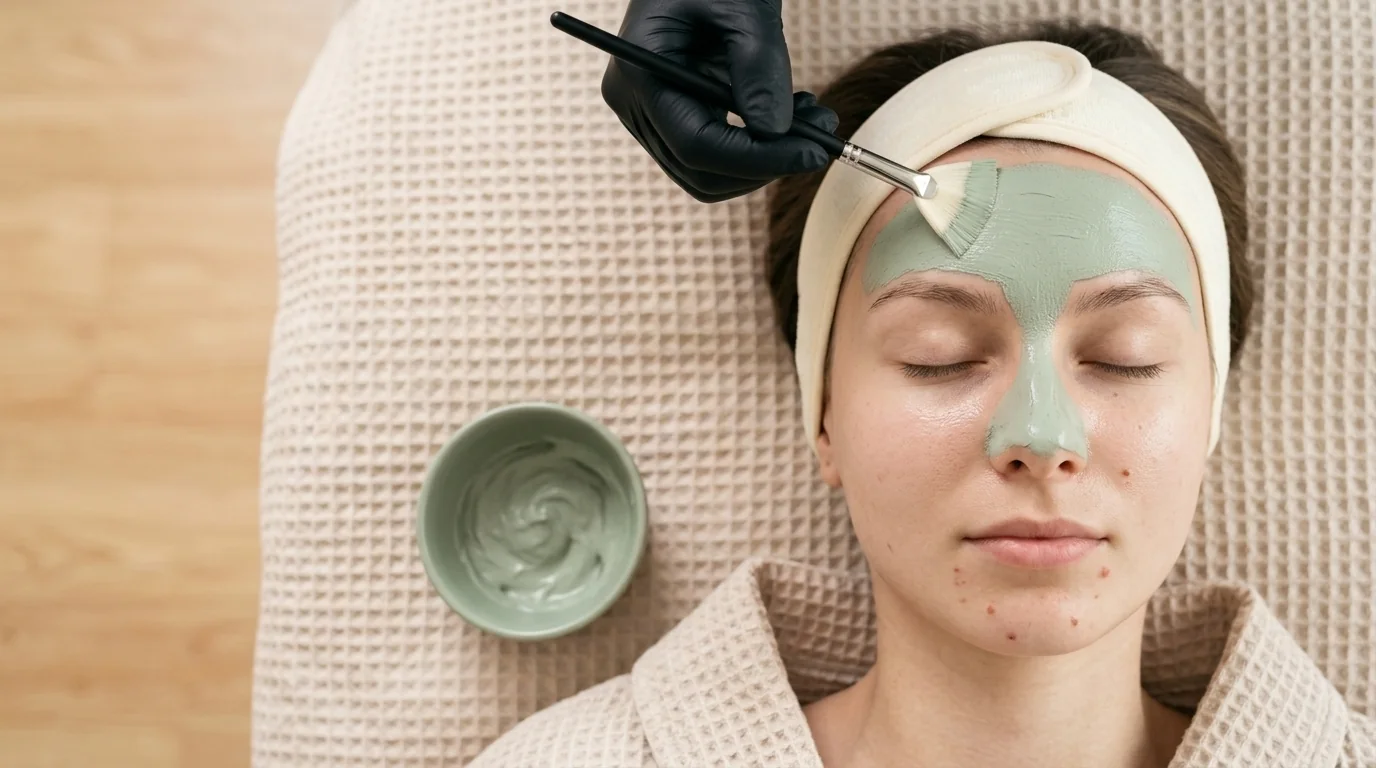
GIGI
Oily, spot-prone skin doesn't need drying products – it needs balance. Here's how the GIGI Clear Skin Control facial and the right home routine help the skin calm down.
Tell us what's on your mind. Deniza will help you choose a suitable treatment before you book.
Hi! Can I help?

Deni answers with ready-made answers from the website and gives no medical advice. Questions are saved without your name to improve the answers – please do not write personal data in the chat.
We use analytics (Google Analytics and Microsoft Clarity) to see how the site is used and to improve it. They are turned on only if you accept. You can change your choice any time at the bottom of the page. Privacy policy