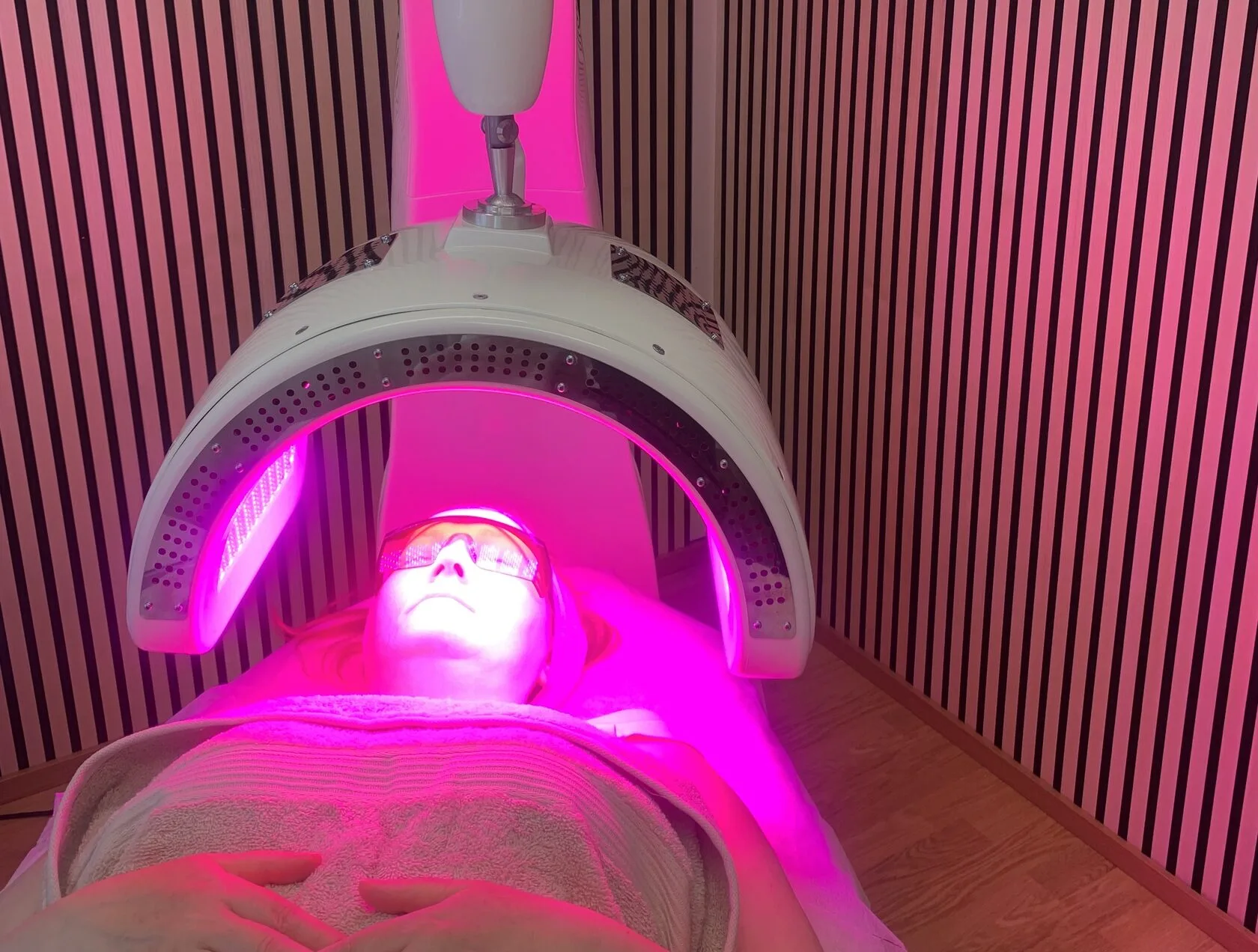
Dermalux Tri-Wave LED
Dermalux Tri-Wave light therapy with red, blue and near-infrared light. It calms, brightens and supports the skin's own renewal – with no touch and no downtime.
75 €60 min
 Book a visit
SKINIQUE JOURNAL · Dermalux · 4 min read
Why do your cheeks flush after the sauna or winter frost? A clear guide to couperose vs. rosacea, sauna protection tips and soothing studio treatments.
Skinique editorial
In everyday conversation, couperose and rosacea are often used interchangeably, but there is an important distinction:
When to see a doctor: a cosmetologist can calm couperose redness and support the barrier of rosacea-prone skin, but a medical diagnosis and prescription creams always belong to a dermatologist. If painful bumps appear or redness suddenly worsens, see a doctor first.
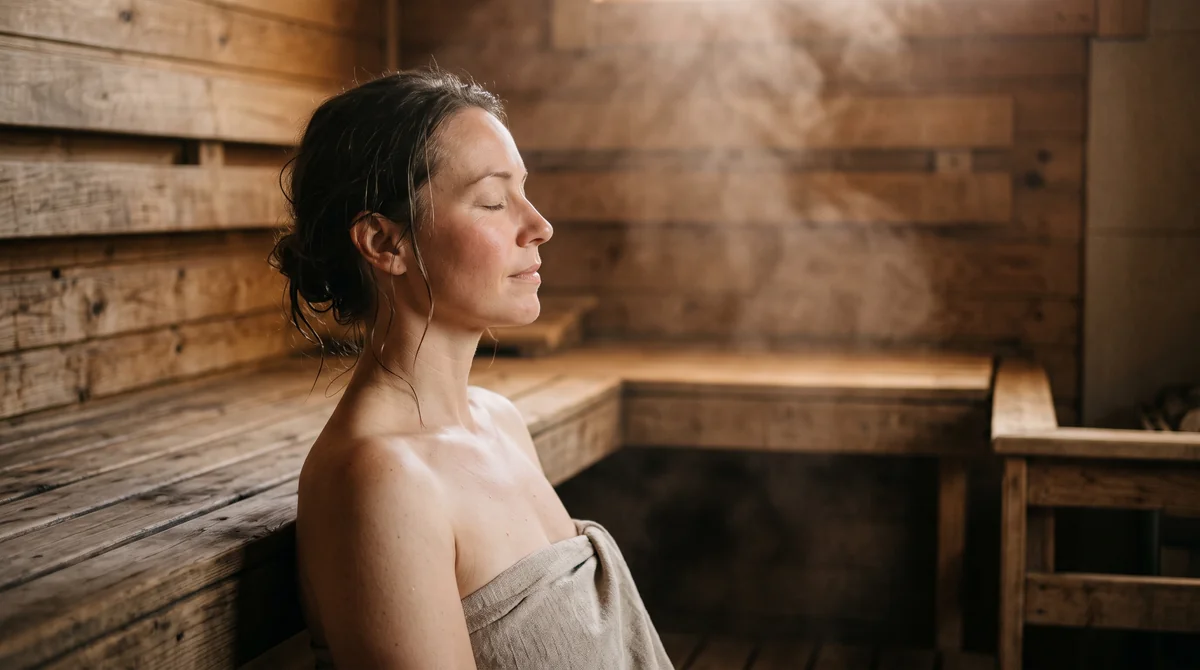
Regular Finnish sauna bathing supports the skin barrier and moisture retention of healthy skin. Skin prone to couperose and rosacea responds differently.
Moving from sub-zero air into a warm room, or stepping into an 80–100 °C sauna, makes surface capillaries dilate quickly to release heat. In resilient skin the vessels constrict back afterwards. In couperose skin the vessel walls have weakened and stay dilated. Intense heat also activates heat-sensitive nerve receptors in the skin, which keeps the flush and low-grade inflammation going long after the sauna.
You do not need to give up the sauna completely unless your rosacea is in an acute flare-up. A few changes will noticeably reduce cheek flushing:
Reactive, redness-prone skin does not tolerate friction and aggressive heat. For this reason, we do not recommend:
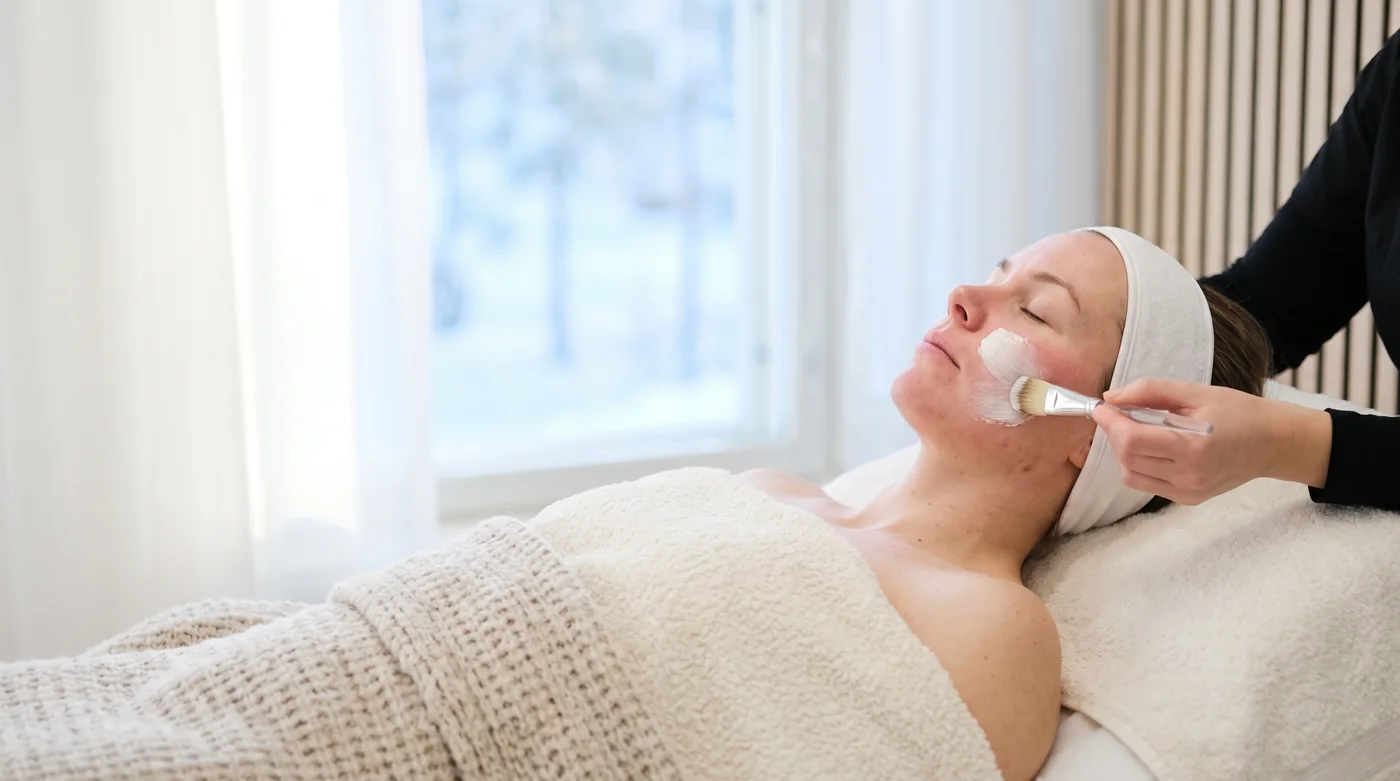
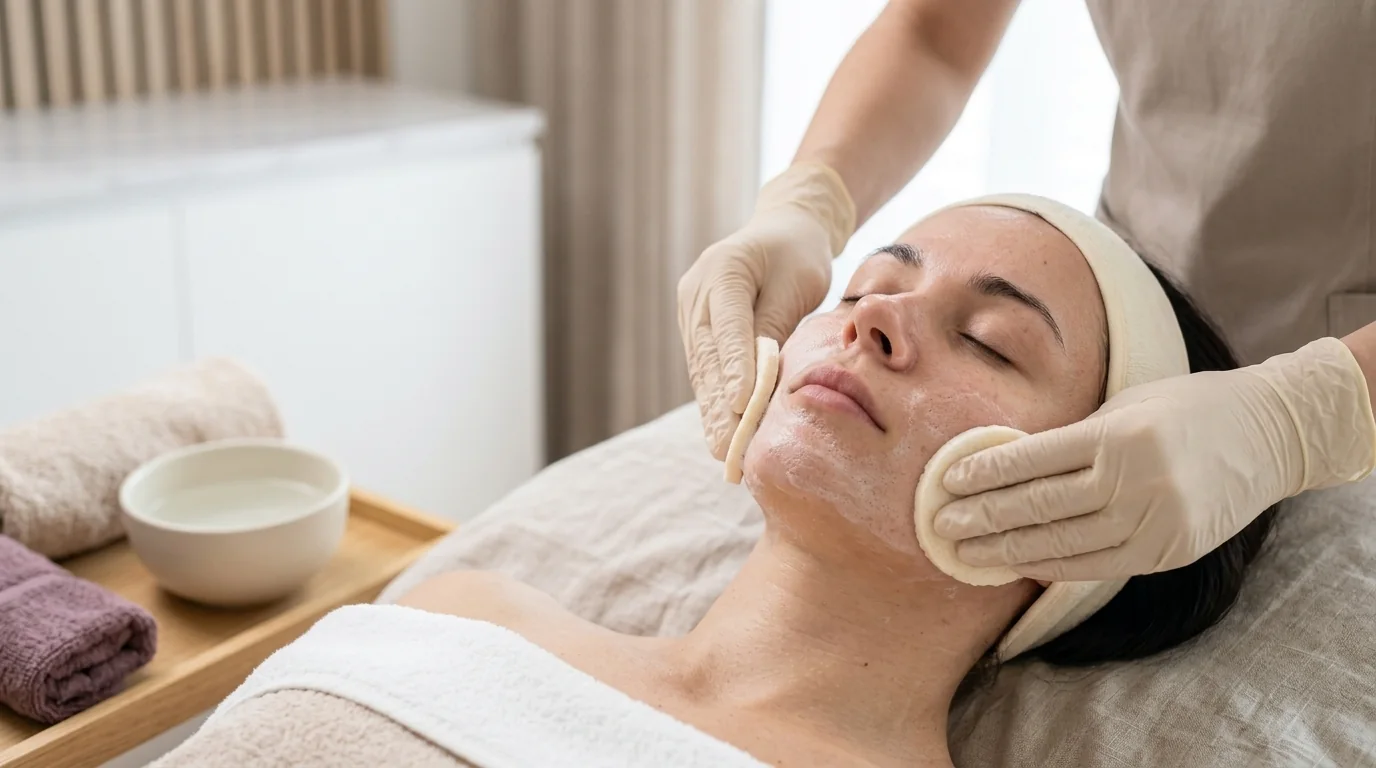
When redness-prone skin needs pore cleansing at Skinique, we skip hot steam and choose the gentle Hydrapeel Facial. Compare cleansing options in which facial cleanse is right for you.
When the skin barrier is compromised, moisture evaporates faster and nerve endings react strongly to wind, frost and heat. In the studio, our goal is to calm inflammation and strengthen the skin's own protective barrier:
At home, a simple and consistent routine works best for couperose skin:
Does Dermalux LED heat the skin like a sauna? No. While the light feels pleasantly gentle, LED photobiomodulation does not heat the tissue, unlike RF or laser treatments. That makes it well suited to fragile, redness-prone skin.
Can facials remove visible broken capillaries? Permanently dilated, visible vessels cannot be removed with creams or facials. Closing them requires vascular laser or IPL treatment at a dermatology clinic. Studio treatments and Dermalux LED calm background flushing and reactivity and help prevent new damage by strengthening the skin.
Prices and recommended treatments at Skinique:
Want to find out what will calm your skin best? Book a visit at our studio in Matinkylä, Espoo, and we will plan every step around your skin's sensitivity.
Seasons
Why does skin feel tight and flaky in winter, and what should you change in your routine? Practical advice for frosty days, the sauna and dry indoor air, and when a facial can help.
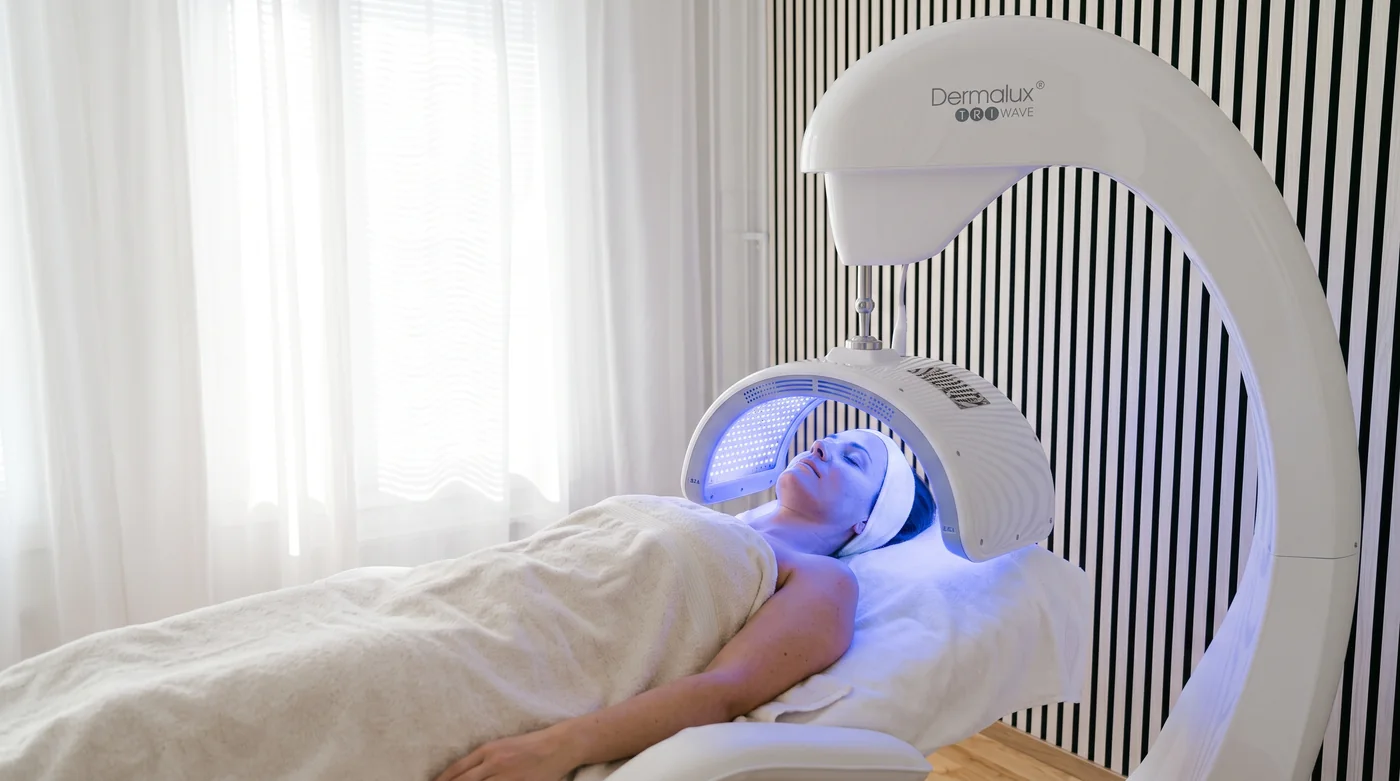
Dermalux
LED light therapy is one of the gentlest ways to support the skin. We explain in plain words how red, blue and near-infrared light work, who it suits and what results to expect.
Cleansing
There are many kinds of cleansing facials and they suit different skin. We compare them clearly: what each does, who it suits, how it feels and what it costs.
Tell us what's on your mind. Deniza will help you choose a suitable treatment before you book.
Hi! Can I help?

Deni answers with ready-made answers from the website and gives no medical advice. Questions are saved without your name to improve the answers – please do not write personal data in the chat.
We use analytics (Google Analytics and Microsoft Clarity) to see how the site is used and to improve it. They are turned on only if you accept. You can change your choice any time at the bottom of the page. Privacy policy