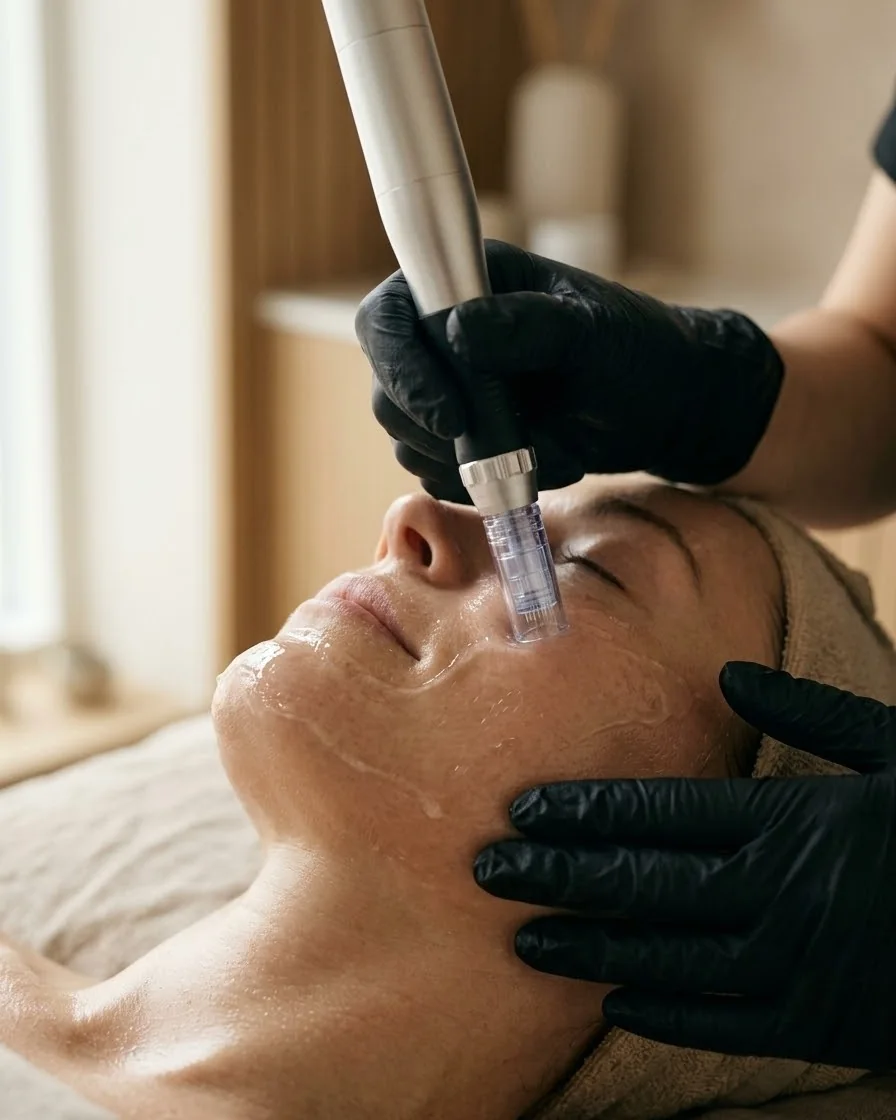
Facial Microneedling
Microneedling in Matinkylä: sterile single-use needles, depth chosen for each area, serums and written aftercare.
110 €60 min
 Book a visit
SKINIQUE JOURNAL · Skin concerns · 4 min read
After acne, the skin can be left with red or brown marks and with dents. Here is how to tell them apart and which treatment suits each.
Skinique editorial
Acne usually leaves two kinds of traces: changes in colour and scars. Red and brown marks sit in the surface of the skin, and they often fade with time. Peels and daily sunscreen can even out the tone faster.
Dents and an uneven surface are a change in the structure of the skin. They need a treatment that makes the skin renew itself from deeper down, such as microneedling. Cosmetic treatments can soften scars, but they do not remove them completely.
Deep and widespread scars are a matter for a doctor. So it is worth working out first which one you have, because marks and scars call for different treatments.
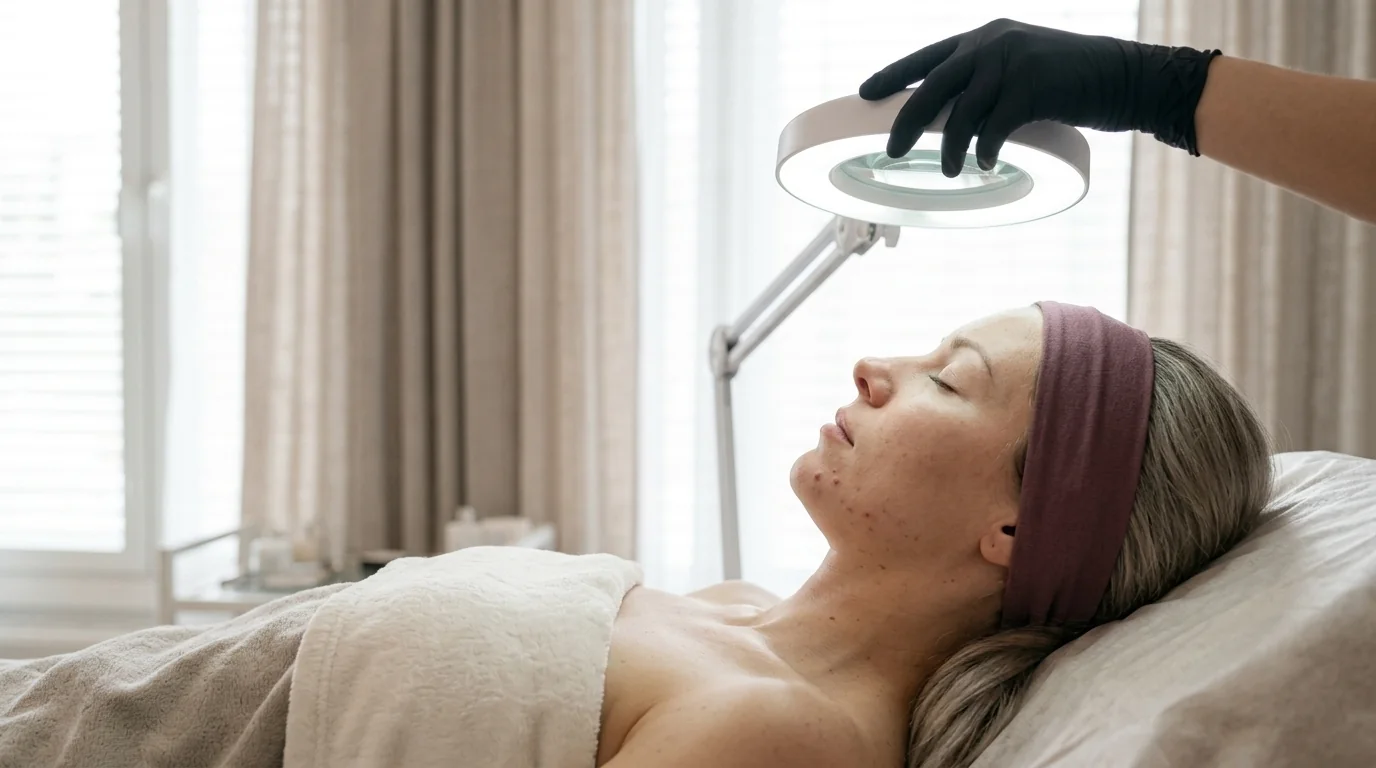
The easiest way to tell is to look at your skin in side light and feel it with a fingertip. A mark is flat: the colour changes, but you feel no dent. A scar shows as a shadow or a dip, and it stands out more clearly in side light than when you look straight on.
Scars also differ from one another:
Many people have both marks and scars at the same time. The treatments can then be combined, and the order is agreed after a skin assessment.
The treatment is chosen by what shows on your skin:
Sunscreen belongs to every option, because UV light darkens the marks. We explain the difference between the two methods in peel or microneedling.
If new inflamed spots are still appearing, those are treated first. Scar treatment is best started once the skin has calmed down. We write about breakouts in adulthood in adult acne.
Peels are not done during pregnancy or breastfeeding. They are also not done if you take isotretinoin or stopped it less than six months ago. Before microneedling, tell us about your medication, pregnancy and any skin conditions, and we will decide together whether the treatment suits you.
See a dermatologist if the scars are deep or widespread, if they are raised or itchy, or if the redness does not fade even after several months. Deniza will tell you plainly at the consultation if she thinks cosmetic treatment is not enough.
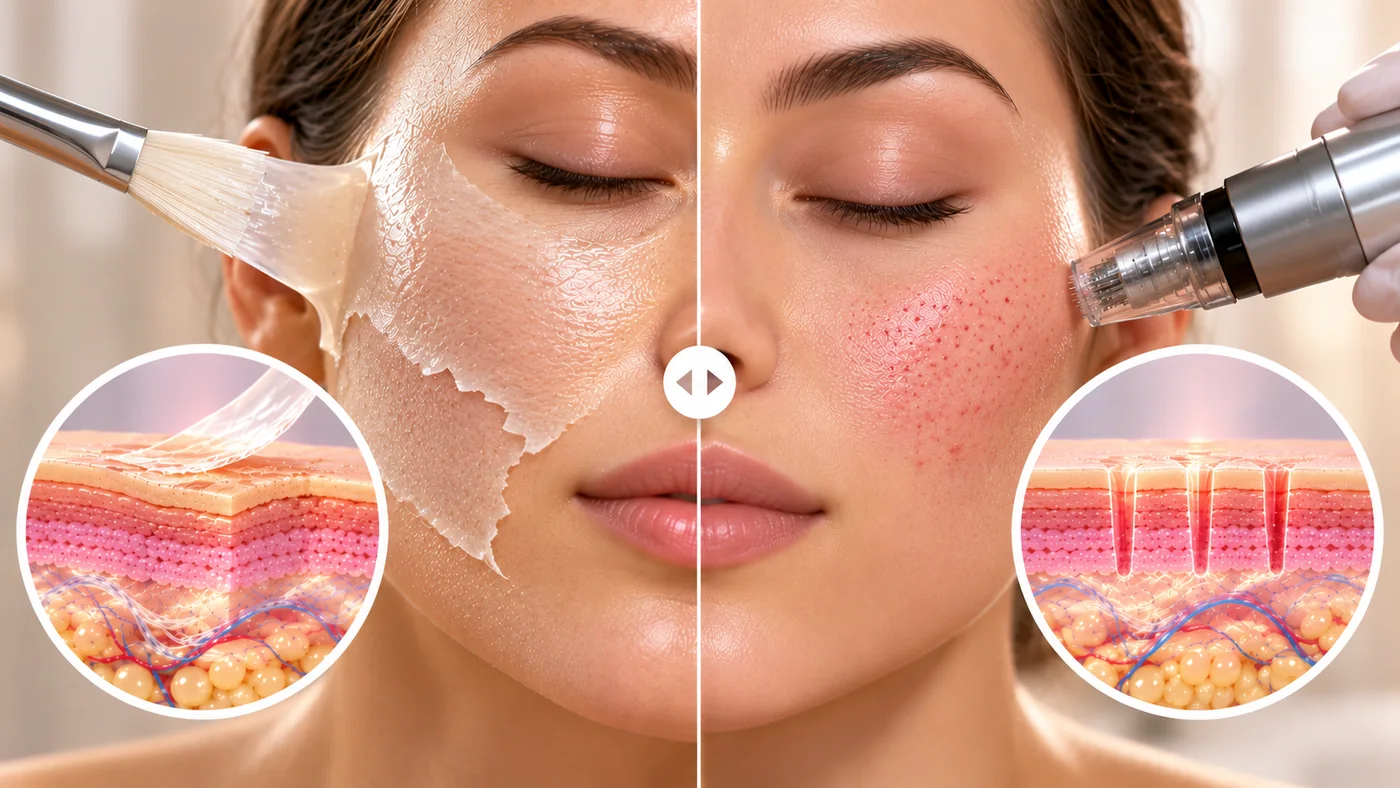
In microneedling, a device makes tiny micro-channels in the skin, and serums are applied afterwards. The skin starts to renew itself, and the change shows gradually. That is why microneedling is done as a course: at least three visits 4–6 weeks apart. The skin may be red afterwards, and you get written aftercare instructions.
BioRePeel C13 is a two-phase peel that usually causes no visible flaking. As a course, it is done every 10–14 days. After an acid peel, the skin may flake lightly for 2–5 days, though not everyone's does.
Aftercare is part of the result. Avoid sauna, swimming and sweaty exercise for 24 hours after BioRePeel and for 48 hours after an acid peel. Use SPF 50 sunscreen every day for at least a week after BioRePeel and for two weeks after an acid peel.
The result is assessed over the course, not after one visit. Deniza suggests the number of treatments based on your skin.
A good first step is a free consultation. Deniza looks at your skin and tells you whether you have marks, scars or both. Then she suggests the order in which the treatments make sense.
If you already know what you want, you can book facial microneedling or microneedling and BioRePeel on one visit directly. For a course, the best value is the course of three microneedling sessions.
Microneedling in Matinkylä: sterile single-use needles, depth chosen for each area, serums and written aftercare.
110 €60 min
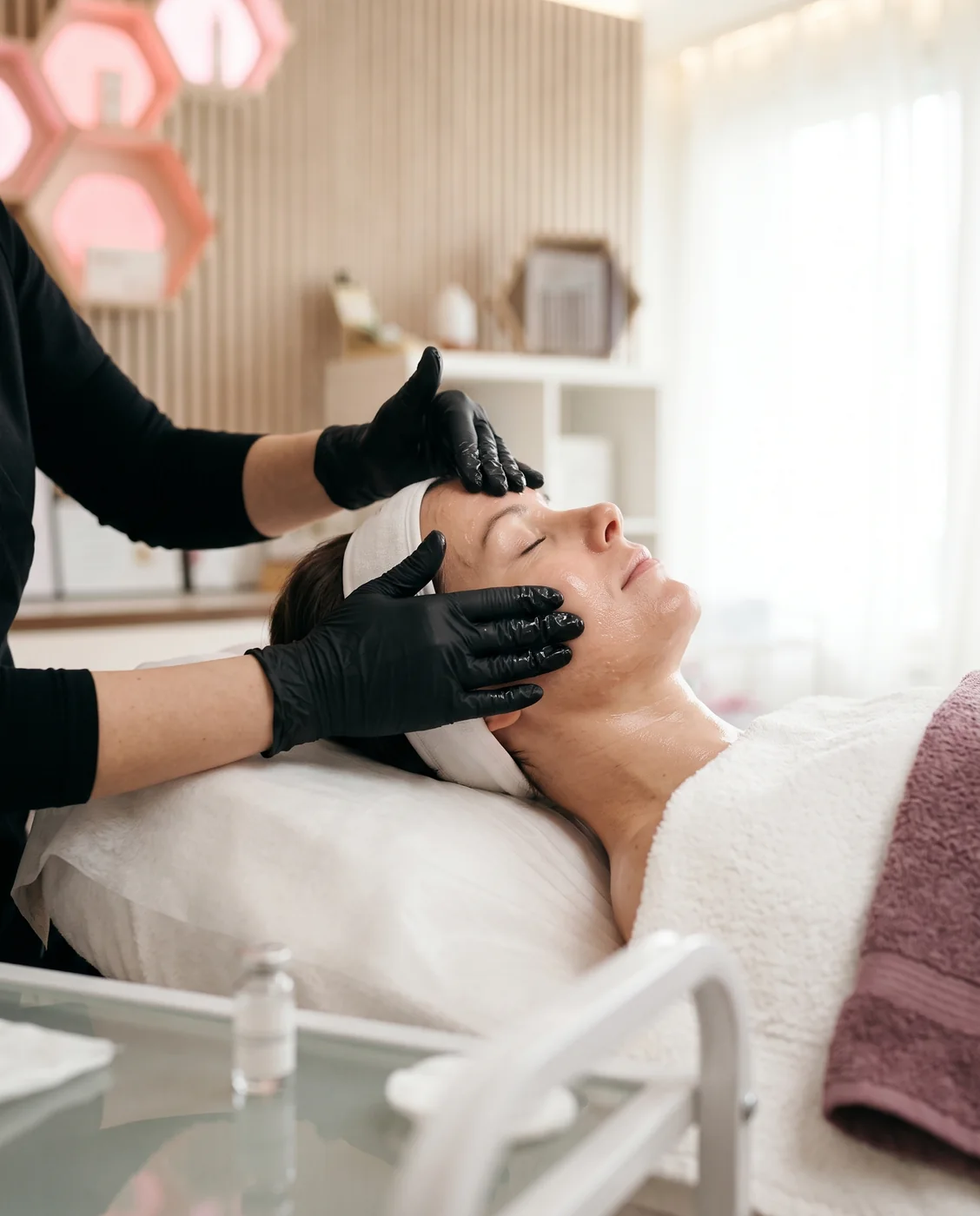
Microneedling and a BioRePeel in one visit: an effective combination for texture, pores and post-acne marks.
139 €75 min

A two-phase BioRePeel that renews and brightens the skin without visible peeling or downtime. Skin is instantly fresh and smooth.
110 €60 min
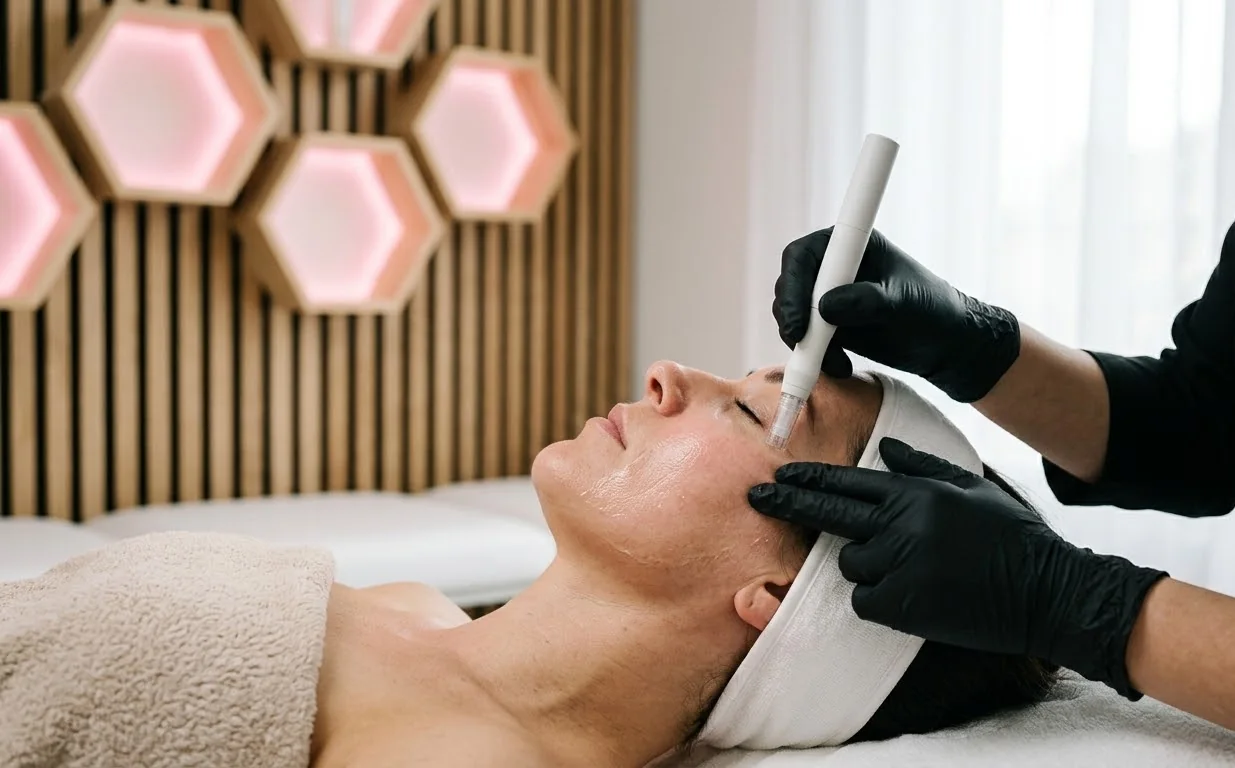
Microneedling
Microneedling is one of the most effective ways to improve skin texture. We explain clearly what happens in the treatment, who it suits, how the skin recovers day by day and how many treatments you need.
Skin care
Adult breakouts are more common than people think, and they differ from teenage acne. We explain the causes, how to care for skin without irritating it and when to see a doctor.
Guides and comparisons
A chemical peel works on the skin's surface, microneedling on its structure. How the treatments differ, who each one suits and how the skin recovers.
Tell us what's on your mind. Deniza will help you choose a suitable treatment before you book.
Hi! Can I help?

Deni answers with ready-made answers from the website and gives no medical advice. Questions are saved without your name to improve the answers – please do not write personal data in the chat.
We use analytics (Google Analytics and Microsoft Clarity) to see how the site is used and to improve it. They are turned on only if you accept. You can change your choice any time at the bottom of the page. Privacy policy